Compare composite doors and timber door options for traditional homes, including cost, maintenance, security, and long-term performance.
What You’ll Learn:
- How composite doors compare to timber doors in appearance and suitability for traditional homes
- The real maintenance differences between a composite door and a timber door over time
- How security and insulation performance differs between composite and timber construction
- Which option offers better value when considering upfront cost and lifetime expense
(Estimated Reading Time: 4-5 Minutes)
Introduction
For owners of traditional-looking homes, choosing between a composite door and a timber door can feel like a difficult compromise. Timber offers authenticity and heritage charm, while composite promises durability, security, and convenience.
The reality is that both can look appropriate on period-style properties, but they perform very differently once installed. Maintenance demands, weather resistance, insulation, and long-term cost all vary significantly between the two.
Homeowners using the Global Door online designer often find that modern timber-look composite styles deliver the appearance they want without the ongoing upkeep of real wood. In this guide, we’ll compare composite doors and timber doors honestly, looking at appearance, maintenance, durability, security, energy efficiency, and lifetime cost so you can make a confident, informed decision.
Appearance and authenticity
The visual appeal of timber doors
There’s no denying the charm of real wood.
Timber doors have natural grain, depth, and character that develop over time. On period properties, this authenticity can be hard to beat.
However, achieving this look often requires bespoke joinery and ongoing maintenance.
How composite doors replicate timber
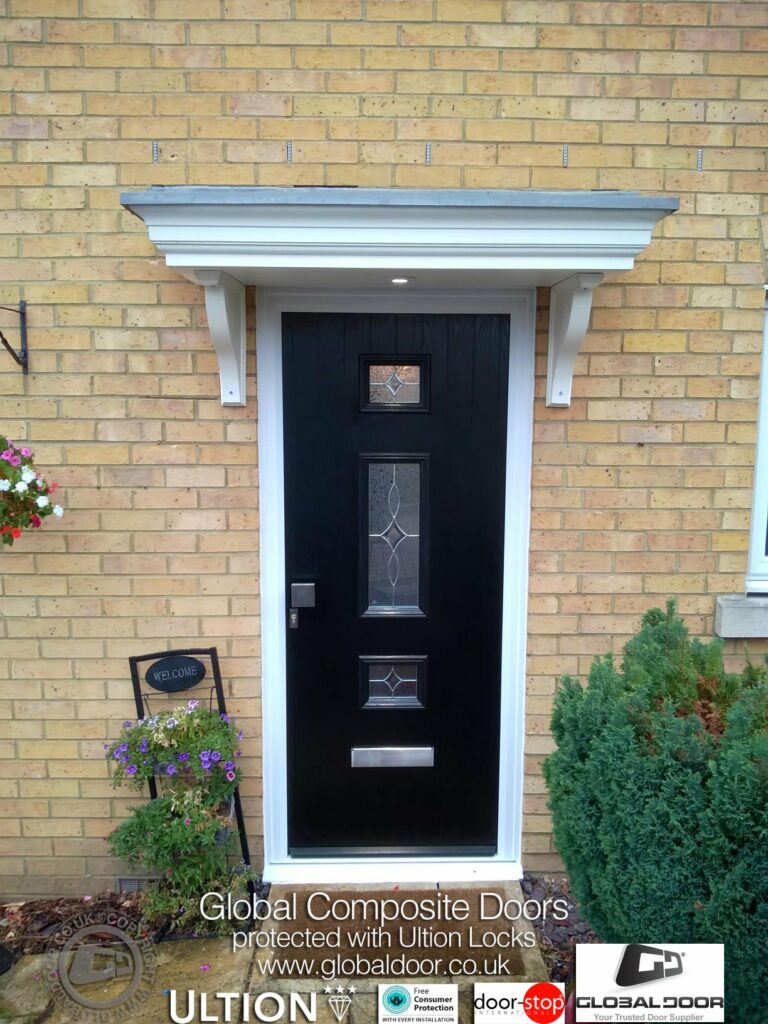
Modern composite doors use GRP skins with realistic woodgrain textures.
From a distance, and often up close, they are visually indistinguishable from timber doors. They replicate traditional panel layouts, glazing styles, and proportions effectively.
For many homes, the visual difference is negligible, especially once the door is painted or finished.
Maintenance and long-term upkeep
Timber door maintenance reality
Timber doors require regular painting or varnishing.
Exposure to rain, sun, and temperature changes causes wood to expand and contract. Over time, this leads to cracking, peeling paint, and potential rot if not maintained properly.
Maintenance costs accumulate year after year.
Composite door maintenance advantage
Composite doors are virtually maintenance free.
The GRP skin does not absorb moisture and does not require repainting. Cleaning is usually sufficient to keep the door looking new.
This alone can save hundreds or thousands of pounds over the life of the door.
Durability in the UK climate
Timber’s vulnerability
The UK climate is particularly harsh on timber.
Rain, humidity, and temperature fluctuations accelerate wear. Even high-quality hardwood doors can swell or warp if exposed.
This affects both appearance and performance.
Composite stability
Composite doors are designed to remain stable in all weather.
They do not warp, swell, or shrink. This keeps locks aligned, seals intact, and operation smooth year-round.
Durability is one of the biggest advantages composite doors offer.
Security comparison
Timber door security
Timber doors can be secure when properly specified, but older or poorly maintained timber doors are vulnerable.
Wood can weaken over time, and older locks may not meet modern security standards.
Composite door security
Composite doors are inherently strong.
The rigid slab resists impact. Multi-point locking systems secure the door at several points. Reinforced frames support the structure.
Security is designed into the product rather than added later.
Energy efficiency and insulation
Timber insulation limitations
Solid timber provides some insulation but is inconsistent.
Gaps develop as wood moves, allowing draughts and heat loss.
Composite door insulation
Composite doors use insulated cores and modern sealing systems.
They provide consistent thermal performance and significantly reduce draughts, improving comfort and energy efficiency.
Cost over time
Upfront cost comparison
Timber doors often have a lower starting price for basic models, but bespoke or high-quality hardwood doors can be expensive.
Composite doors sit in the mid-range and often include better security and insulation as standard.
Lifetime cost
When maintenance, repairs, and potential replacement are considered, composite doors are usually cheaper over the long term.
Timber doors incur ongoing costs that composite doors avoid.
Suitability for traditional properties
Composite doors suit a wide range of traditional homes.
With appropriate styles, colours, and glazing, they preserve character while improving performance.
Planning and conservation considerations should always be checked, but composite doors are increasingly accepted as sympathetic replacements.
Environmental considerations
Timber is a renewable material when sourced responsibly.
Composite doors use manufactured materials but offer long lifespans, reducing replacement frequency.
The environmental impact depends on sourcing, lifespan, and maintenance cycles.
Making the right choice for your home
Choose timber if authenticity is the top priority and you are prepared for maintenance.
Choose composite if you want a traditional look with modern performance, security, and minimal upkeep.
For many homeowners, composite doors offer the best balance.
Using the online designer to compare styles
An online door designer allows you to visualise timber-look composite doors and compare them to traditional designs.
You can test colours, glazing, and layouts to find a solution that suits your home without compromising performance.
Final thoughts and next steps
Composite doors have closed the gap with timber in terms of appearance while far surpassing it in practicality.
For traditional-looking homes, they offer a smart, long-term solution that balances aesthetics, security, and budget.
If you’re weighing up composite versus timber, the next step is to explore timber-look composite styles using the Global Door online designer. Build your door, review the specification, and see the price before making a decision.
🛒 Browse the full collection at Global Door
📞 Or call 01642 309576 for expert guidance and a no-pressure quote.
In a rush? Why not contact us via Whatsapp
Browse our articles
- Measuring and Ordering a Composite Door DIY
- 6 Panel Composite Door: A Timeless Budget Choice
- Grey Composite Doors: Pebble Grey vs Anthracite
- Trade Composite Doors: looking for trade prices? Visit our trade site, The Trade Village
FAQ’s
Q1: Which looks more authentic: timber or composite?
A1: Timber is naturally authentic, but modern composite can closely replicate timber looks with woodgrain textures and traditional styles.
Q2: Which costs less over time?
A2: Composite often costs less over time because it avoids repainting, swelling/warping issues, and frequent maintenance.
Q3: Which is more secure?
A3: Composite is typically more secure due to rigid construction and multi-point locking systems designed into the door set.
Q4: Which is better in the UK climate?
A4: Composite is usually better because it resists moisture-driven movement and stays stable through wet and cold seasons.