Cottage style composite doors add warmth and character to more homes than you’d think. Explore styles, colours, costs, and how to get the look right.
What You’ll Learn:
- What makes a cottage composite door different from other styles
- Why cottage composite doors work well beyond rural homes
- Which colours and glass options feel authentic (and affordable)
- How to keep a cottage composite door on budget without losing character
(Estimated Reading Time: 4-5 Minutes)
Introduction
Cottage style composite doors aren’t just for rural cottages or country lanes anymore. In fact, this relaxed, character-led style has become a popular choice for everything from Victorian terraces and 1930s semis to modern homes that feel a little too plain.
The appeal is simple. Cottage style composite doors bring warmth, texture, and authenticity — without the maintenance headaches of real timber. And when chosen carefully, they deliver that country look at a sensible price point, not a luxury one.
In this guide, we’ll explain what defines a cottage composite door, why the style works across far more UK homes than most people expect, and how to achieve an authentic look without overspending or drifting into something that feels forced or overly rustic.
What Defines Cottage Style Composite Doors
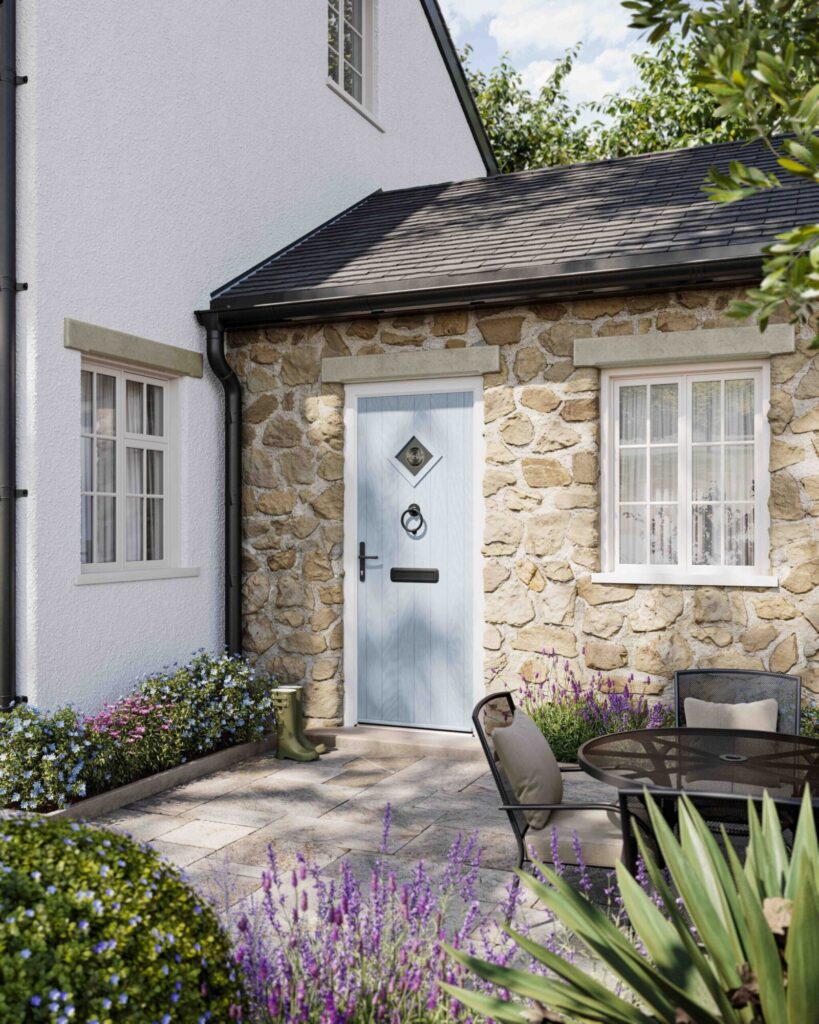
Cottage style composite doors take their inspiration from traditional plank and ledge timber doors.
The defining features are vertical grooves or boards, simpler panel layouts, and restrained glazing. The aim is to create a handcrafted, honest appearance rather than a decorative or formal one.
Unlike ornate traditional doors, cottage styles tend to feel relaxed and informal. That’s part of their charm. They suggest heritage without looking grand or imposing.
Modern composite versions replicate this look using a GRP skin with realistic woodgrain texture, bonded to an insulated core and installed in a reinforced frame. The appearance is traditional. The performance is thoroughly modern.
Why Cottage Style Composite Doors Work Beyond Rural Homes
The reason cottage composite doors work in so many settings is balance.
They soften hard architectural lines and bring character to properties that might otherwise feel flat. On a red brick terrace, a cottage-style door can add warmth. On a rendered semi, it can create contrast. On a new build, it can introduce a sense of individuality.
Cottage doors are also forgiving. They don’t demand perfect symmetry or pristine surroundings. Minor imperfections in brickwork or paths often look better alongside a door with texture and depth.
This makes them a popular choice for renovation projects and older properties where modern minimalist doors can feel out of place.
Cottage Style Without The Maintenance Headaches
Traditional cottage doors were almost always timber, and timber brings problems.
Moisture absorption, swelling, shrinking, cracking, and regular repainting are all common issues, especially in exposed locations.
Composite style cottage doors eliminate these problems entirely. The GRP skin does not absorb water. The insulated core maintains rigidity. The door stays square and secure year after year.
You get the visual appeal of a traditional cottage door without the ongoing cost and effort of maintaining real wood.
This is particularly valuable for budget-conscious homeowners who want character without future expense.
Popular Cottage Composite Door Styles
Several cottage styles consistently offer strong value and broad appeal.
Full-height plank designs with vertical grooves are the most recognisable. They work well as front doors and look especially good in heritage colours.
Half-glazed cottage doors are another popular option. A simple glazed panel in the upper section allows natural light into the hallway while maintaining privacy and security.
Doors with small square, diamond, or rectangular glass inserts suit period homes and help avoid the overly solid look that can make entrances feel dark.
These styles are visually effective without relying on complex glazing or bespoke detailing, which keeps costs sensible.
Choosing Colours That Feel Authentic
Colour choice is critical for cottage composite doors.
Muted, heritage-inspired colours tend to work best. Chartwell Green, Sage, Duck Egg Blue, Cream, Pebble Grey, and classic White are all popular choices for a reason. They feel rooted in traditional paint palettes and sit comfortably alongside brick and stone.
Woodgrain finishes such as Oak or Darkwood are another strong option, especially for homes that want a natural appearance without committing to real timber.
Avoid ultra-glossy or highly saturated colours if authenticity is the goal. Softer tones feel more natural and age better visually.
From a budget perspective, standard colours are usually the most cost-effective and widely available.
Glass Options That Suit Cottage Designs
Cottage doors benefit from restraint when it comes to glazing.
Smaller glass areas feel more authentic and help preserve the solid, grounded character of the door. Frosted or lightly patterned glass provides privacy without feeling heavy.
Lead-style patterns can work well, but simpler designs are often more timeless and affordable.
Large expanses of clear glass tend to look out of place on cottage doors unless the property is set well back or has a porch.
Choosing the right glass is less about price and more about proportion.
Security That Doesn’t Spoil The Look
One concern buyers sometimes have is whether a cottage-style door compromises security.
In practice, composite doors offer excellent security regardless of appearance.
Multi-point locking systems are concealed within the door and frame. Reinforced cores resist forced entry. Modern hinges and hardware are engineered for strength.
Traditional-style handles, knockers, and letterboxes can be chosen to maintain the cottage look without sacrificing performance.
From the outside, the door looks charming and traditional. From a security standpoint, it performs like a modern reinforced barrier.
Energy Efficiency and Comfort Benefits
Many cottage-style homes suffer from draughty entrances.
Older doors, worn seals, and thin panels allow cold air to enter, making hallways uncomfortable in winter.
Composite cottage doors solve this by combining insulated cores with modern sealing systems. The result is a warmer, quieter, and more comfortable entrance.
This improvement is particularly noticeable in older properties, where upgrading the door can have a disproportionate impact on comfort.
It’s a simple change that delivers daily benefits.
Front Doors and Back Doors in Cottage Style
Cottage style composite doors are not limited to front entrances.
They work equally well as back or side doors, particularly in kitchens, utility rooms, or garden-facing elevations.
Half-glazed cottage designs are especially popular for back doors, offering light and character without looking too formal.
Using the same style or colour across multiple entrances can create a cohesive look and may offer better value when ordered together.
How to Keep a Cottage Composite Door on Budget
The key to staying on budget is simplicity.
Choose a classic plank design.
Keep glazing modest.
Select standard heritage colours.
Opt for practical hardware.
Avoid bespoke sizing unless essential.
Cottage doors don’t need embellishment to look good. Their appeal lies in their honesty and texture.
Using an online door designer helps visualise options and control costs in real time, avoiding accidental overspecification.
Final Thoughts and Next Steps
Cottage composite doors offer one of the best ways to add character to a home without compromising on performance or budget.
They suit far more properties than most people expect, from rural cottages to urban terraces and modern homes that need warmth and individuality.
With strong security, excellent insulation, and minimal maintenance, they deliver practical benefits alongside visual charm.
If you’re considering a cottage composite door, the best next step is to explore styles and pricing using the Global Door online designer. You can build your door, see how different colours and glazing affect the look and price, and move forward with confidence.
🛒 Browse the full collection at Global Door
📞 Or call 01642 309576 for expert guidance and a no-pressure quote.
In a rush? Why not contact us via Whatsapp
FAQ’s
Q1: Are cottage composite doors only for rural homes?
A1: No. Cottage doors suit terraces, semis, and new builds too because the textured design adds warmth and character to many property styles.
Q2: What’s the best glazing for a cottage door?
A2: Modest frosted or patterned glazing usually looks most authentic while keeping privacy and cost under control.
Q3: Do cottage doors need extra maintenance?
A3: Composite cottage doors are low maintenance compared to timber. They typically only need occasional cleaning.
Q4: Can cottage doors be modern?
A4: Yes. Pairing cottage textures with modern colours like greys or muted tones can create a fresh look if kept simple.