Discover why a Chartwell Green composite door is timeless, versatile and budget friendly, plus how to style it for your home.
What You’ll Learn:
- Understand why Chartwell Green feels timeless, versatile, and widely suited to UK homes
- Identify which composite door styles look best with Chartwell Green finishes
- Learn how glazing choices influence privacy, light levels, and overall door appearance
- Discover practical ways to design a composite door while keeping overall costs controlled
(Estimated Reading Time: 4-5 Minutes)
INTRODUCTION
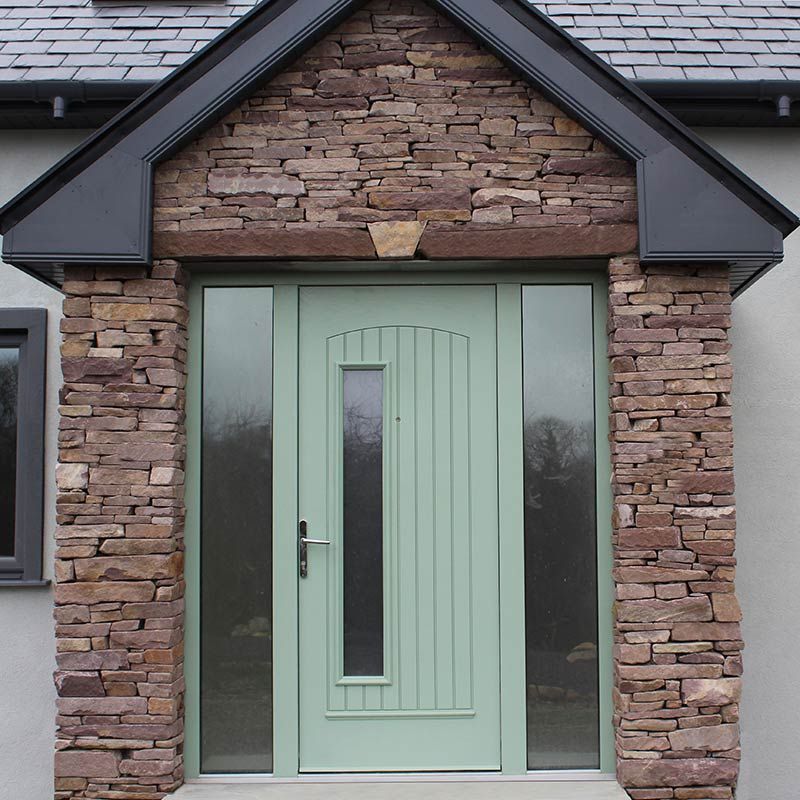
Chartwell Green has become one of the most sought-after colours for a composite door in the UK, and it’s easy to see why. Subtle, elegant and endlessly versatile, it offers character without overpowering your home’s exterior.
Unlike fashion-led colours that date quickly, Chartwell Green feels calm and established. It suits period properties, cottages and modern homes alike, making it one of the safest yet most stylish choices available.
Homeowners browsing the Global Door range are increasingly drawn to this shade because it delivers on both appearance and value. You get a door that looks premium and thoughtfully designed, without pushing the budget into uncomfortable territory.
In this guide, we’ll explore why Chartwell Green works so well, which styles suit it best, how to choose glazing and hardware, and how to achieve the look without overspending.
WHAT IS CHARTWELL GREEN AND WHY IS IT SO POPULAR
Chartwell Green is a soft, muted green with grey undertones.
Unlike bright greens or deep forest shades, it feels natural and heritage-inspired. It sits comfortably alongside brick, stone, render, and timber, making it easy to integrate into a wide range of UK properties.
Its popularity comes from versatility. Chartwell Green adds colour without dominating the facade. It feels traditional without looking dated. And it avoids the risk associated with bold, fashion-led colours.
For many homeowners, it’s the safe choice that still feels distinctive.
WHY CHARTWELL GREEN WORKS ON COMPOSITE DOORS
Composite doors are particularly well suited to Chartwell Green finishes.
The GRP skin holds colour consistently and resists fading, ensuring the subtle tone remains stable over time. This is important for muted colours, where uneven fading would be more noticeable.
Unlike painted timber doors, composite doors don’t require repainting to maintain the colour. This keeps long-term costs down and avoids the maintenance cycle associated with traditional green-painted doors.
The result is a door that looks heritage-inspired but behaves like a modern product.
BEST DOOR STYLES FOR CHARTWELL GREEN
Chartwell Green works across multiple door styles, but some combinations stand out.
Traditional panelled doors are a natural fit. Six-panel and two-panel designs in Chartwell Green suit period homes particularly well.
Cottage-style plank doors look especially authentic in this colour. The grooves and texture enhance the organic feel, creating a door that looks genuinely handcrafted.
Contemporary designs can also work if the door style is simple. Minimal glazing and clean lines allow the colour to do the work without feeling out of place.
The key is restraint. Chartwell Green works best when paired with proportionate designs rather than overly complex layouts.
CHOOSING THE RIGHT GLASS FOR A CHARTWELL GREEN DOOR
Glass choice can subtly influence how Chartwell Green reads on a door.
Frosted or lightly patterned glass complements the softness of the colour and maintains privacy. It suits front doors facing the street and avoids harsh contrast.
Lead-style glass works well on traditional and cottage doors, reinforcing the heritage feel.
Clear glass is best reserved for recessed entrances or porches, where privacy is less of a concern.
Avoid heavily tinted or mirrored glass, which can clash with the understated nature of the colour.
HARDWARE THAT COMPLEMENTS CHARTWELL GREEN
Hardware choice plays a surprisingly important role.
Chrome and satin finishes provide a clean contrast and work well on both traditional and contemporary designs.
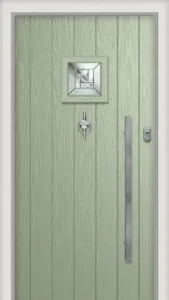
Black hardware creates a more rustic, cottage-inspired look and pairs well with plank-style doors.
Brass or antique gold finishes add warmth and can elevate the door visually, particularly on period properties.
There’s no need to choose premium hardware to achieve a good result. Standard, well-finished handles and knockers often look just as effective.
ENERGY EFFICIENCY AND PRACTICAL BENEFITS
Beyond aesthetics, Chartwell Green composite doors deliver the same practical benefits as any quality composite door.
The insulated core helps reduce heat loss and eliminate draughts. Modern sealing systems keep cold air out and improve comfort around the entrance.
For older homes, this can make a noticeable difference, particularly in winter months.
Because the colour is stable and low maintenance, there’s no need for repainting, which saves time and money over the lifespan of the door.
FRONT DOORS AND BACK DOORS IN CHARTWELL GREEN
While most commonly chosen for front doors, Chartwell Green works equally well on back and side entrances.
Using the same colour across multiple doors creates a cohesive look and can make the property feel more considered and complete.
Alternatively, pairing a Chartwell Green front door with a neutral back door offers contrast while maintaining harmony.
The flexibility of composite doors makes either approach easy to achieve.
HOW TO KEEP COSTS UNDER CONTROL
Chartwell Green is usually a standard colour option, which helps keep pricing sensible.
To stay on budget:
Choose a simple door style.
Keep glazing modest.
Avoid bespoke sizing where possible.
Select standard hardware finishes.
Use an online designer to track price changes.
Most of the appeal of Chartwell Green comes from the colour itself rather than expensive add-ons.
USING THE ONLINE DESIGNER TO VISUALISE THE RESULT
An online door designer is particularly useful for Chartwell Green doors.
Because the colour is subtle, seeing it applied to different styles helps avoid uncertainty. You can test how it looks on traditional, cottage, and contemporary designs and adjust glazing and hardware until it feels right.
Seeing the price update in real time also helps prevent accidental overspend.
FINAL THOUGHTS AND NEXT STEPS
Chartwell Green composite doors offer a timeless alternative to trend-driven colours. They add character, suit a wide range of properties, and remain visually appealing year after year.
For budget-conscious homeowners, they provide excellent value. You get a door that looks considered and premium without the ongoing maintenance of painted timber.
If you’re considering Chartwell Green for your next composite door, the best next step is to explore your options using the Global Door online designer. Build your door, adjust the details, and see an instant price tailored to your choices.
🛒 Browse the full collection at Global Door
📞 Or call 01642 309576 for expert guidance and a no-pressure quote.
In a rush? Why not contact us via Whatsapp
FAQ’s
Q1: Is Chartwell Green a good colour for resale?
A1: Often yes, because it’s muted, heritage-inspired, and widely accepted as tasteful rather than trend-driven.
Q2: Does Chartwell Green suit modern homes?
A2: It can, especially with simpler door designs and clean hardware. It’s most commonly used on traditional and cottage styles.
Q3: What hardware finishes work best with Chartwell Green?
A3: Chrome/satin are clean and versatile. Black feels more rustic. Brass adds warmth and heritage character.
Q4: Is Chartwell Green hard to keep clean?
A4: It’s generally practical. It hides minor marks better than white and is easy to maintain with routine cleaning.