Learn how to measure and order a composite door correctly, avoid costly DIY mistakes, and get the specification right first time.
What You’ll Learn:
- How to measure openings correctly and avoid ordering the wrong composite door size
- How to identify handing, thresholds, and floor levels before placing your order
- How to choose glazing, hardware, and specifications that suit DIY installation
- Which common DIY mistakes cause delays, extra costs, and fitting problems
(Estimated Reading Time: 5-6 Minutes)
Introduction
Ordering a composite door on a DIY basis can be a smart way to save money, but only if the measuring and specification are done correctly. Most costly mistakes happen long before installation, caused by simple errors in sizing, opening direction, or overlooked details.
A composite door is a precision product. Getting the wrong size, frame, or configuration can turn a budget-friendly purchase into an expensive setback. That’s why careful planning matters just as much as the door itself.
Homeowners using the Global Door online designer often find it helpful for checking options, visualising configurations, and sense-checking specifications before committing to an order. In this guide, we’ll walk through how to measure accurately, what to double-check, and how to avoid the most common DIY traps.
Is DIY the right option for you
Before measuring anything, it’s worth being honest about skill level.
DIY installation is suitable if you are confident with accurate measuring, understand door construction, and can install frames square and plumb.
If there’s any doubt, professional installation may be the safer and ultimately cheaper option.
Understanding door sizes and openings
Brick opening vs door size
One of the most common mistakes is confusing brick opening size with door size.
The door supplied includes the frame. The brick opening must be larger than the overall door frame to allow for fitting tolerances.
Always measure the brick-to-brick opening, not the existing door.
Standard vs non-standard sizes
Most composite doors are available in standard sizes, which are cheaper and quicker to supply.
Non-standard sizes increase cost and lead times. Where possible, design the door to fit a standard opening.
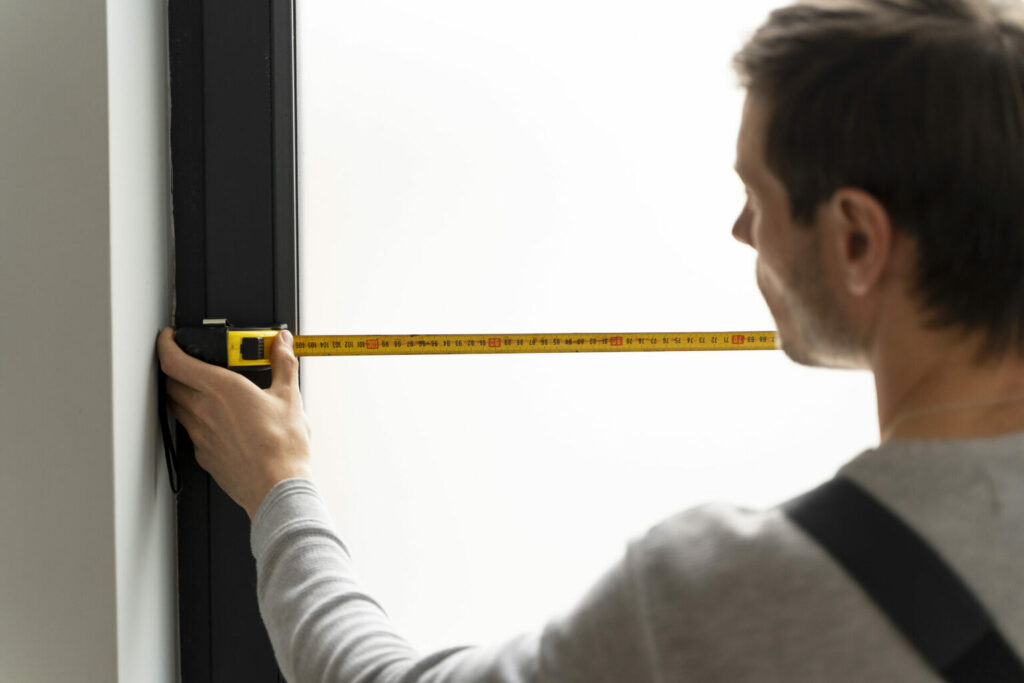
How to measure the opening correctly
Width measurements
Measure the width of the brick opening at three points:
Top
Middle
Bottom
Use the smallest measurement.
Height measurements
Measure the height at both sides and in the centre. Again, use the smallest measurement.
Allowing fitting tolerance
A fitting tolerance of around 10mm is typically required. Do not order the door to the exact brick opening size.
If unsure, seek guidance before ordering.
Checking the opening direction
Opening direction errors are common and costly.
Stand outside the property and face the door.
If the hinges are on the left, it is left-hand hung.
If the hinges are on the right, it is right-hand hung.
This rule applies regardless of whether the door opens inward or outward.
Thresholds and floor levels
Standard vs low thresholds
Threshold choice affects accessibility and weather sealing.
Low thresholds are useful for accessibility but require correct drainage and sealing.
Standard thresholds offer better weather protection and are often safer for DIY installations.
Internal floor heights
Check internal floor levels carefully. Changes in floor height can affect threshold choice and door height.
Failing to account for this can result in doors that scrape or leave gaps.
Choosing glazing and privacy correctly
Glass choice affects security, privacy, and cost.
Frosted or obscure glass is best for street-facing doors.
Clear glass is suitable for porches or set-back entrances.
Smaller glazed areas are easier to fit and more forgiving.
Avoid complex glazing if this is your first DIY door.
Hardware and specification checks
Locks and cylinders
Confirm the locking system and cylinder specification before ordering.
Ensure multi-point locking is included and that the cylinder meets modern security standards.
Handles and furniture
Check handle colour, style, and handing.
Some handles are handed, and choosing the wrong option can delay installation.
Delivery, storage, and handling
Composite doors are heavy.
Ensure you have adequate access for delivery and space to store the door flat and protected before installation.
Avoid storing doors in damp or uneven areas.
Common DIY mistakes to avoid
- Ordering the wrong size.
- Forgetting the frame is included.
- Misidentifying opening direction.
- Ignoring threshold requirements.
- Choosing overly complex glazing.
- Rushing measurements.
Double-check everything before payment.
When to pause and get advice
If the opening is out of square.
If floor levels are uneven.
If the opening has been altered previously.
If side panels or top lights are involved.
In these cases, professional advice can prevent expensive errors.
Using an online designer as a DIY tool
An online door designer is not just for pricing.
It helps visualise size, configuration, glazing, and hardware. It also highlights options that affect fitting and cost.
Use it to sense-check your choices before ordering.
Final thoughts and next steps
DIY composite doors can offer excellent value, but only when measured and specified correctly.
Taking time at the measuring stage avoids delays, additional costs, and frustration later.
If you’re confident and careful, a supply-only composite door can be a smart budget decision.
If you want to design your door and check options before ordering, the Global Door online designer is the best place to start. Build your door, review the specification carefully, and move forward with confidence.
🛒 Browse the full collection at Global Door
📞 Or call 01642 309576 for expert guidance and a no-pressure quote.
In a rush? Why not contact us via Whatsapp
Browse our articles
- 6 Panel Composite Door: A Timeless Budget Choice
- Grey Composite Doors: Pebble Grey vs Anthracite
- Composite Back Door: Strong, Secure, and Energy-Efficient
- Trade Composite Doors: looking for trade prices? Visit our trade site, The Trade Village
FAQ’s
Q1: How do I know if I’m measuring correctly?
A1: Measure the brick opening (not the old door), take three width measurements and three height measurements, and use the smallest figures.
Q2: How do I choose left-hand or right-hand opening?
A2: Stand outside facing the door. Hinges on the left means left-hand hung. Hinges on the right means right-hand hung.
Q3: What’s the most common DIY ordering mistake?
A3: Ordering the wrong size or forgetting fitting tolerances. The door should not be ordered to the exact brick-to-brick measurement.
Q4: Should I DIY or get it fitted?
A4: DIY can save money if you’re confident with accurate measuring and fitting. If you’re unsure, fitting is often cheaper than correcting mistakes.