Looking for budget composite doors? Learn what affects door prices, what to avoid, and how to get real value without costly mistakes.
What You’ll Learn:
- What really affects budget composite doors and their door prices
- What a good budget composite door should include as standard
- Which features increase door prices without adding real value
- How to control composite door prices using an online designer
(Estimated Reading Time: 4-5 Minutes)
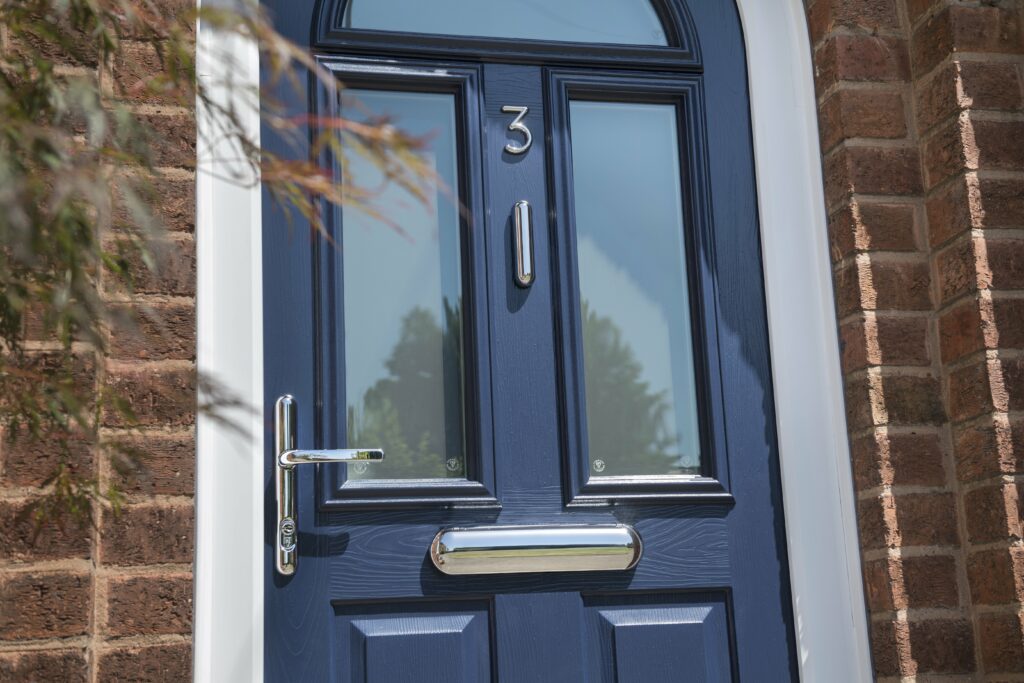
Budget Composite Doors: Introduction
If you’re researching budget composite doors, chances are you’re trying to balance looks, security, and sensible door prices — without buying something you’ll regret a few years down the line.
At Global Door, we speak to homeowners every day who’ve seen wildly different prices for what appears to be the same product. One composite door is £500, another is £1,500 — and both claim to be “high quality”.
The truth is simple: some budget composite doors offer genuine long-term value, while others cut corners in ways that only show up after installation. In this guide, we break down what actually affects composite door prices, which specifications matter, and which ones are mostly marketing noise.
By the end, you’ll know how to choose a composite door that fits your home and your budget — and how to price it accurately online before committing.
What is a Composite Door, Really
A composite door isn’t one material. It’s a layered system designed to outperform traditional timber and basic uPVC doors.
At its core, a quality composite door uses a GRP outer skin. GRP stands for Glass Reinforced Plastic, and it’s the same material used in high-performance applications because it’s strong, stable, and resistant to weather.
Behind that skin is an insulated core, usually polyurethane foam or a solid engineered timber composite. This is what gives the door its rigidity, strength, and thermal performance. Around the door is a reinforced uPVC frame, which provides structural support, weather sealing, and compatibility with modern locking systems.
When done properly, this combination creates a door that looks like timber, insulates better than uPVC, and requires virtually no maintenance. When done badly, it creates a door that’s composite in name only.
Why Composite Door Prices Vary So Much
One of the most confusing parts for buyers is the huge price range. You’ll see composite doors advertised anywhere from a few hundred pounds to several thousand.
Here’s what actually drives the cost.
The door style matters. A plain, solid door slab will always be cheaper than one with multiple glazed sections or intricate panel detailing. More cuts, more glass, more labour.
Glass is a major cost variable. Decorative glazing, privacy glass, triple glazing, or specialist patterned units all add cost. Clear or simple frosted glass is far more budget-friendly.
Colour choices can affect price. Standard colours like white, black, and popular greys are usually included. Less common colours or dual-colour options can add a premium, although some suppliers absorb this cost.
Hardware upgrades matter. Long bar handles, premium cylinders, and designer hardware look great, but they do push the price up. Standard handles and proven lock systems offer better value for budget buyers.
Installation versus DIY has a huge impact. Supply-only doors cost significantly less than fully fitted packages. However, poor fitting can undo all the benefits of a good door.
What You Should Expect From Good Budget Composite Doors
Budget composite doors should still meet certain non-negotiables.
It should be thick and rigid. Composite door slabs are typically around 44mm thick or more. Anything significantly thinner is cutting corners.
It should have a multi-point locking system as standard. This means the door locks at several points along the frame, not just one latch.
It should meet UK building regulations for thermal performance. If it doesn’t, it’s not fit for purpose as an external door.
It should come with a meaningful guarantee. Ten years is now the baseline expectation for a quality composite door.
It should feel heavy and solid when you open and close it. If it feels flimsy in a showroom or on installation day, it won’t improve with age.
What You Can Safely Ignore When Buying On a Budget
There are features often used to inflate prices that most homeowners don’t actually need.
You don’t need exotic core materials. Marketing around “space-age” cores often adds little real-world benefit for domestic use.
You don’t need ultra-complex glazing unless privacy or aesthetics demand it. Simple designs age better and cost less.
You don’t need bespoke sizes unless your opening genuinely requires it. Standard sizes are cheaper and quicker to supply.
You don’t need gimmicky smart features unless you’ll use them daily. Mechanical security done properly is still extremely effective.
Composite vs Other Door Types On a Budget
When buyers are price-conscious, composite doors are often compared with uPVC and timber.
uPVC doors are cheaper upfront, but they flex more, insulate less effectively, and tend to look tired sooner. Over time, they often end up replaced earlier than planned.
Timber doors look great initially, but maintenance costs add up. Painting, swelling, warping, and eventual rot are common issues, particularly in the UK climate.
Aluminium doors are strong and modern-looking, but they are rarely budget-friendly. Even entry-level aluminium doors tend to sit well above composite pricing.
Composite doors sit in the sweet spot. They cost more than basic uPVC but deliver far better longevity, security, and insulation, making them cheaper over the lifespan of the door.
How To Stay On Budget Without Buying a Bad Door
This is where most buyers go wrong. They chase the lowest headline price instead of controlling the spec intelligently.
Start with the door style. Choose a design that suits your home but doesn’t rely heavily on complex glazing.
Choose a standard colour. Black, white, anthracite grey, and popular heritage tones are widely available without surcharges.
Keep glazing simple. Frosted or lightly patterned glass provides privacy without the cost of ornate designs.
Select reliable, proven hardware rather than premium designer options. Security comes from the locking system, not the handle shape.
Decide early whether you’re fitting yourself or using a professional. DIY saves money, but only if you’re confident in accurate measuring and installation.
Why Online Door Designers Are a Budget Buyer’s Best Friend
One of the smartest ways to stay in control of cost is to use an online composite door designer.
Instead of being quoted a vague starting price, you can see exactly how each choice affects the final cost. Change the colour, see the price. Swap the glass, see the difference. Adjust hardware, instantly understand the impact.
This transparency is crucial for budget buyers. It removes surprises and puts you in control of the spend.
Using a door designer also allows you to explore different styles without pressure. You can build a door that looks premium but stays within a sensible price range, all before speaking to anyone.
When Budget Composite Doors Are The Right Decision
Budget composite doors make sense if your existing door is draughty, insecure, or visually dated.
It’s ideal if you want to improve kerb appeal before selling or refinancing.
It’s a smart choice if you’re renovating and want modern performance without luxury pricing.
And it’s often the best option if you’re replacing a failed uPVC or timber door and want a long-term solution.
Final Thoughts And Next Steps
Buying a composite door on a budget doesn’t mean compromising on quality. It means understanding where value actually lies and avoiding features that add cost without adding benefit.
A well-specified budget composite door will improve security, reduce heat loss, modernise your home, and last for decades with minimal maintenance.
If you want to see what’s possible within your own budget, the next step is simple. Use the Global Door online designer to choose a style, customise it to suit your home, and see a real-time price before committing. It’s the easiest way to get a composite door that looks right, performs properly, and stays firmly within budget.
🛒 Browse the full collection at Global Door
📞 Or call 01642 309576 for expert guidance and a no-pressure quote.
In a rush? Why not contact us via Whatsapp
Browse our Articles
- uPVC vs Composite Front Door: True 10-Year Costs
- Traditional Composite Doors on a Budget | Global Door
- Contemporary Composite Doors: Premium Style, Sensible Cost
- Trade Composite Doors: looking for trade prices? Visit our trade site, The Trade Village
FAQ’s
Q1: What is the cheapest way to buy a composite door?
A1: The cheapest route is usually supply-only (DIY or your own fitter), choosing a standard size, standard colour, simple glazing, and standard hardware. The big cost drivers are complex glass, bespoke sizing, and premium handles.
Q2: Are budget composite doors still secure?
A2: Yes, if the door has a rigid composite slab, multi-point locking, a decent anti-snap cylinder, and is fitted correctly. Price matters less than the core spec and installation quality.
Q3: What makes composite door prices go up most?
A3: Large or decorative glazing, side panels/top lights, unusual colours or dual colours, premium hardware, non-standard sizes, and fully fitted packages typically increase cost the most.
Q4: Is a composite door worth it over uPVC if I’m on a budget?
A4: Usually yes for a main entrance, because composite doors tend to be more rigid, more secure, better insulated, and longer lasting, which often makes them better value over time.