Discover the best composite back door styles for kitchens and garden access, balancing light, privacy, security, and affordability.
What You’ll Learn:
- How to choose a composite back door that balances light, privacy, and everyday usability
- Which composite back door styles work best for kitchens, dining areas, and utility rooms
- What security features matter most when specifying a composite back door
- How to keep composite back door costs sensible without sacrificing performance
(Estimated Reading Time: 5-6 Minutes)

Introduction
A composite back door does far more than simply connect the house to the garden. In most homes, it is one of the busiest entrances, exposed to constant use, changing weather, and the daily challenge of balancing light, privacy, and security.
The wrong composite back door can leave kitchens feeling dark, cold, or overlooked. The right one can make the space brighter, more comfortable, and more secure without increasing maintenance or stretching the budget.
This guide explains which composite back door styles work best for real UK homes, how to choose between solid and glazed designs, and how to get the balance right between practicality and cost.
What a good kitchen or garden back door needs to do
Before looking at styles, it’s important to understand the job.
A good back door should:
- Let in natural light.
- Maintain privacy.
- Provide strong security.
- Withstand constant use and exposure.
- Be easy to clean and maintain.
Composite doors are well suited to this role, but the style choice matters.
Why composite doors make sense at the back of the house
Composite doors are often associated with front entrances, but they’re arguably even more valuable at the rear.
They resist warping in wet conditions, stay secure under frequent use, and insulate better than many older uPVC or timber back doors.
For kitchens and dining spaces, this translates into better comfort and reliability year-round.
Half glazed composite back doors: the most popular choice
Why half glazing works so well
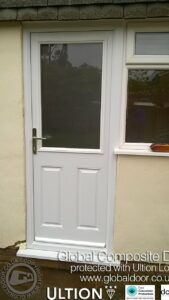
Half glazed composite back doors are the go-to option for kitchens.
They allow plenty of light into the room without turning the door into a full glass panel. The solid lower section provides privacy and strength, while the glazed upper section brightens the space.
Best glass types for kitchens
Frosted or obscure glass is the most practical choice.
It prevents overlooking while still letting light through and hides splashes or fingerprints better than clear glass.
Fully glazed composite back doors: when they work best
Garden-facing settings
Fully glazed composite back doors can work well when the garden is private or enclosed.
They create a stronger visual connection between indoors and outdoors and can make kitchens and dining areas feel larger.
Security considerations
Modern composite doors use toughened, double glazed units with internal beading, making them secure when specified correctly.
However, keeping glazing proportionate helps balance heat retention and cost.
Solid composite back doors: underrated but effective
When solid doors make sense
Solid composite back doors are ideal for utility rooms, side entrances, or kitchens where privacy is a priority.
They offer maximum insulation and security and are often the most budget-friendly option.
Adding light elsewhere
If choosing a solid door, consider adding light through nearby windows or rooflights rather than the door itself.
Cottage-style back doors for kitchens
Cottage composite doors work particularly well in kitchen settings.
Plank designs and simple glazing add warmth and character, especially in older homes or country-style kitchens.
Half glazed cottage doors are a popular choice, offering charm without sacrificing practicality.
Contemporary back door styles
For modern kitchens, contemporary composite doors with clean lines and vertical glazing work well.
They pair nicely with modern cabinetry and finishes and feel intentional rather than purely functional.
Keeping glazing simple helps maintain a clean look and control cost.
Privacy considerations for back doors
Overlooked gardens
If neighbouring properties overlook the garden, privacy glass is essential.
Frosted, patterned, or reeded glass prevents clear views while maintaining daylight.
Night-time privacy
Remember that at night, internal lighting makes glass more transparent.
Choosing the right glass avoids uncomfortable visibility after dark.
Security features that matter at the back
Back doors are common entry points for intruders.
Ensure the door includes:
- Multi-point locking.
- A high-security cylinder.
- A reinforced frame.
- Toughened, internally beaded glazing.
These features are standard on quality composite doors and should not be compromised.
Energy efficiency in kitchens and dining spaces
Back doors often open into heated rooms.
Composite doors reduce heat loss and draughts, helping kitchens stay warmer and more comfortable, particularly in winter.
This benefit is often felt immediately after installation.
Colour choices for back doors
Back doors don’t need to match the front door, but they can.
Neutral colours are practical and forgiving.
Darker colours hide marks.
Lighter colours brighten shaded areas.
Choose what suits the space rather than defaulting to the front door colour.
Keeping the cost sensible
To stay on budget:
- Choose half glazed designs.
- Stick to standard colours.
- Avoid oversized glass panels.
- Select practical hardware.
Most performance benefits come from the core construction, not cosmetic upgrades.
Using the online designer to choose the right style
An online door designer allows you to compare back door styles quickly.
You can test solid vs glazed options, adjust glass types, and see how each choice affects the price.
This makes it easier to choose a door that suits both the kitchen and the budget.

Common mistakes to avoid
Choosing full glass without considering privacy.
Overcomplicating glazing.
Underestimating security needs.
Treating the back door as secondary.
Avoiding these mistakes leads to a more satisfying upgrade.
Final thoughts and next steps
The best composite back door balances light, privacy, security, and durability.
For kitchens and garden access, half glazed composite doors are often the most practical choice, but solid and fully glazed options can work in the right settings.
If you’re choosing a new back door, the next step is to explore styles using the Global Door online designer. Compare designs, adjust the specification, and see pricing clearly before committing.
🛒 Browse the full collection at Global Door
📞 Or call 01642 309576 for expert guidance and a no-pressure quote.
In a rush? Why not contact us via Whatsapp
Browse our articles
- Composite Door Finance: Upgrade Without Upfront Pressure
- Composite Door Cost: A Spring Upgrade That Makes Sense
- Composite Door Hardware: What’s Worth Paying For
- Trade Composite Doors: looking for trade prices? Visit our trade site, The Trade Village
FAQ’s
Q1: What’s the best back door style for a kitchen?
A1: Half glazed composite doors are often best because they bring light in while keeping privacy and security.
Q2: Is a fully glazed back door safe?
A2: It can be, if it uses toughened, double glazed units and internal beading, and the door has multi-point locking.
Q3: What glass is best for privacy at the back?
A3: Frosted/obscure or reeded glass is usually best, especially if gardens are overlooked or close to neighbours.
Q4: Should my back door match my front door?
A4: It’s optional. Matching creates cohesion, but many homeowners choose a simpler rear design for practicality and cost control.