Discover the best door glass for a contemporary composite door. Balance privacy, natural light, and style without compromising security or budget.
What You’ll Learn:
- How different types of door glass balance privacy and natural light in modern composite doors
- When frosted, clear, or reeded glass is most suitable for UK homes
- How geometric and patterned glass can enhance contemporary door design without overspending
- Key security and energy considerations for modern composite door glass
(Estimated Reading Time: 5-6 Minutes)
Introduction
Glass is one of the most powerful design features on a contemporary composite door. It controls natural light, privacy, and first impressions simultaneously.
When chosen correctly, it brightens hallways, enhances the entrance, and elevates the home’s style. The wrong choice can leave interiors exposed or overly dark.
In this guide, we’ll explain the most popular contemporary door glass options—frosted, clear, reeded, and patterned—where each works best, and how to maintain privacy, light, and security while staying within budget.
Why glass choice matters more on contemporary doors
Contemporary door designs rely heavily on glass.
Unlike traditional doors where panels dominate, modern composite doors often use vertical glass strips, square windows, or geometric layouts as the main visual feature.
This makes the glass choice far more noticeable and far more important. The wrong glass can ruin an otherwise well-designed door.
Frosted glass: the safe, practical favourite
What frosted glass actually does
Frosted glass diffuses light while obscuring detail.
It allows daylight into the hallway but prevents clear visibility from outside. Shapes and movement may be visible, but faces and interiors are not.
Where frosted glass works best
Street-facing front doors
Homes without porches
Busy roads or overlooked entrances
For most UK homes, frosted glass is the most practical and forgiving option.
Design impact on contemporary doors
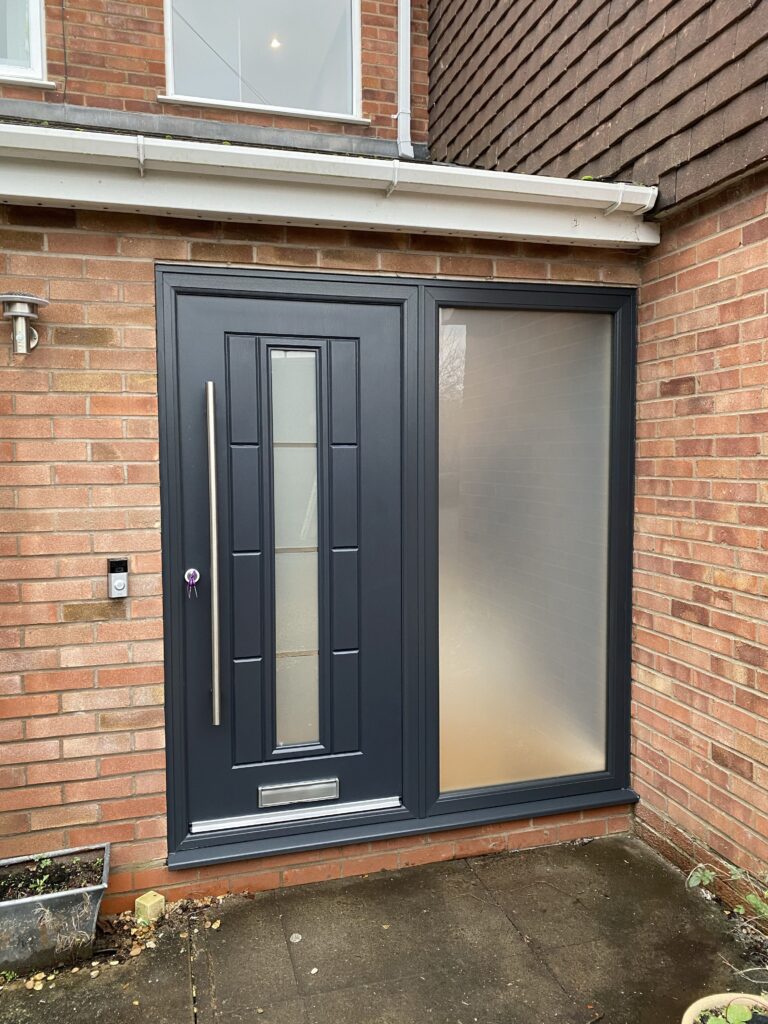
On modern composite doors, frosted glass keeps the look clean and minimalist.
It works especially well with vertical glass panels and square layouts, where simplicity is part of the appeal.
Clear glass: bold, but situational
When clear glass makes sense
Clear glass can look stunning, but only in the right context.
It works best where privacy is already protected, such as:
Homes with deep porches
Set-back entrances
Gated or private properties
In these cases, clear glass can flood hallways with light and create a striking modern entrance.
Risks of clear glass
On exposed or street-facing doors, clear glass compromises privacy.
It can also create security concerns by revealing occupancy and layout.
For most budget-conscious buyers, clear glass is best used sparingly or avoided altogether unless the setting is ideal.
Reeded glass: privacy with texture
What reeded glass is
Reeded glass features vertical ridges or flutes that distort views while allowing light through.
It offers a middle ground between frosted and clear glass.
Why reeded glass suits contemporary doors
Reeded glass adds texture without decoration.
It feels architectural and modern, aligning perfectly with contemporary composite door designs.
It provides strong privacy while still allowing generous daylight.
Practical benefits
Reeded glass hides fingerprints and smudges better than clear glass.
It’s also visually forgiving, making it a strong choice for busy households.
Patterned and geometric glass options
Modern patterned glass
Some contemporary doors use geometric or etched patterns.
When kept simple, these can enhance the design without overpowering it.
Avoid overly busy patterns if budget and longevity are priorities.
Balancing style and cost
Complex patterns increase cost without always improving function.
Simple patterns or textures often deliver better long-term value.
How glass size affects privacy and light
Tall narrow panels vs large panes
Tall, narrow glass panels provide light while limiting sightlines.
Large panes increase brightness but also increase visibility.
For most contemporary doors, vertical strips offer the best balance.
Positioning matters
Glass placed higher on the door improves privacy.
Lower glass panels increase visibility and should be specified carefully.
Security and modern door glass
Toughened and sealed units
All quality composite door glazing is toughened and double glazed.
This ensures strength, safety, and resistance to impact.
Internal glazing beads
Modern doors use internal beading, preventing glass removal from the outside.
This is essential and should never be compromised to save money.
Energy efficiency considerations
Glass insulates less than solid panels, but modern glazing performs well.
The difference in heat loss between frosted and reeded glass is negligible in real-world use.
Draughts are usually caused by poor fitting, not glass choice.
Budget-friendly glass choices that still look premium
Frosted glass with clean lines
Reeded glass with vertical panels
Simple geometric patterns
Standard glazing sizes
These options keep costs sensible while delivering a modern look.
Using the online designer to compare glass options
An online door designer allows you to switch between glass types instantly.
You can see how frosted, clear, or reeded glass changes the look of the door and how it affects price.
This makes it much easier to avoid over-specifying or under-thinking the decision.
Common mistakes to avoid
Choosing clear glass on exposed doors
Using oversized glass panels unnecessarily
Overcomplicating patterns
Ignoring privacy at night
Glass should enhance the door, not create regret.
Final thoughts and next steps
Contemporary door glass is about balance.
Frosted glass offers practicality. Reeded glass adds texture and privacy. Clear glass creates impact, but only in the right setting.
Most homeowners achieve the best results by choosing glass that improves light without sacrificing privacy or security.
If you’re choosing glass for a contemporary composite door, the best next step is to explore options using the Global Door online designer. Compare glass types, visualise the result, and see how each choice affects the price before committing.
🛒 Browse the full collection at Global Door
📞 Or call 01642 309576 for expert guidance and a no-pressure quote.
In a rush? Why not contact us via Whatsapp
Browse our articles
- Best Composite Door Colours for Resale Value
- Is a Composite Door Worth It in Winter? Heat, Draughts & Cost
- Composite Doors vs Timber Doors: An Honest Guide
- Trade Composite Doors: looking for trade prices? Visit our trade site, The Trade Village
FAQ’s
Q1: Which glass gives the best privacy?
A1: Frosted/obscure and reeded glass usually provide the best privacy while still letting in light.
Q2: Is reeded glass good for front doors?
A2: Yes. It offers privacy with a modern texture and works well with contemporary door styles.
Q3: When is clear glass appropriate?
A3: Clear glass works best when the entrance is recessed, has a porch, or isn’t overlooked. For street-facing doors, it’s usually not ideal.
Q4: Does door glass affect security?
A4: Not if it’s toughened, double glazed, and internally beaded. Security comes from correct specification and installation.